Tool storage and organisation in a small workshop
Good storage means every tool has a place you can reach without moving something else, edges are protected and nothing sits on a damp floor.
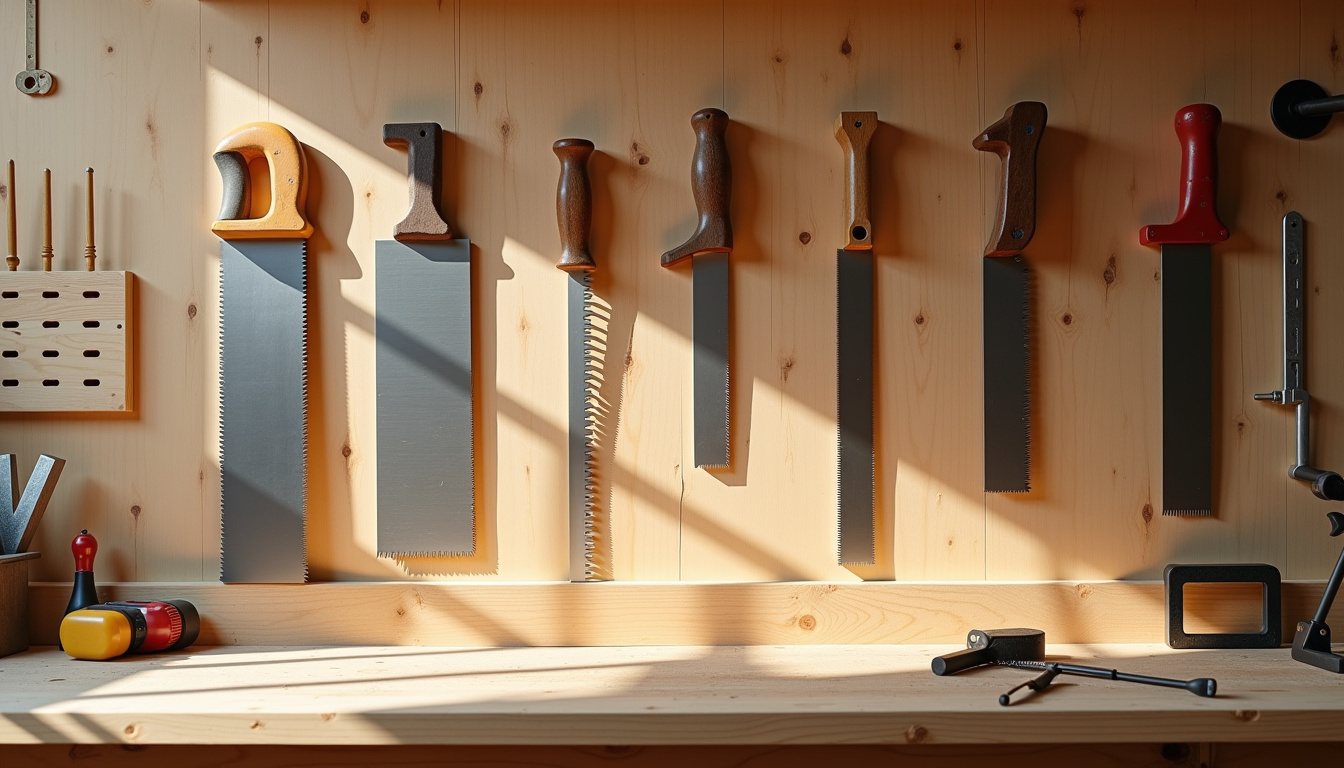
A small workshop gets cluttered fast. Every project leaves offcuts, half-used boxes of screws and a few tools that did not go back. Within a few weeks the bench is covered and you spend more time looking for the square than using it. Storage does not need to be elaborate, but it does need to follow a few rules.
Principles that work
- Frequency decides position. Tools you use every session go within arm's reach of the bench. Monthly tools go higher or further away. Rarely used items go in labelled boxes on high shelves.
- One movement to reach. If you have to move one thing to get to another, you will eventually stop putting it back.
- See what you own. Open racks and shallow drawers beat deep boxes where tools sink to the bottom and are forgotten.
- Protect edges. Saws, chisels and plane irons stored loose will dull and chip each other.
- Nothing on a damp floor. Concrete wicks moisture and is cold, which encourages condensation on anything sitting on it.
Walls first
In a garage or shed, the wall area is usually larger and more useful than the floor. Before you fill it, check what you are fixing into. Garage walls are often single-skin blockwork or brick, which takes plugs and screws well. Shed walls are thin cladding on a frame, so fix into the framing members or add horizontal battens across them to spread the load.
French cleats
A French cleat is a strip of timber or plywood ripped lengthways at 45 degrees. One half is screwed to the wall with the bevel facing up and towards the wall; the matching half is fixed to the back of a holder, shelf or cabinet, which then hooks over it. Holders can be lifted off and moved anywhere along the wall. A cleat wall is quick to build from 18 mm plywood strips, holds heavy loads when the wall half is properly fixed, and grows with the tool collection.
Pegboard and slatwall
Pegboard is quick and cheap for lightweight tools. Fix it to battens so there is space behind for the hooks, and use hooks with a locking clip, as plain hooks lift out every time you take a tool. Slatwall panels are sturdier and suit heavier items, at a higher cost.
Shelves and wall cabinets
Closed wall cabinets keep dust off finished tools and planes, and a cabinet is a good place for a desiccant pouch to keep the air inside drier. Open shelves suit boxed power tools, glue, finishes and boxes of fixings. Keep heavy items at waist to shoulder height to avoid lifting from awkward positions.
Drawers and cabinets
Shallow drawers, 50 to 100 mm deep, store measuring and marking tools, chisels, files and small items far better than deep ones. Line them with a thin foam or cork mat so tools do not slide. Many people cut fitted recesses for each tool so a gap shows immediately when something is missing.
A rolling cabinet under the bench or beside it keeps everyday tools close and can be moved to where you are working.
Fixings and consumables
Screws, nails, plugs and washers are the main source of clutter. Clear-lidded organiser boxes with adjustable compartments let you see what you have. Label each compartment with size and type, for example "4.0 x 40 mm PZ2 wood screw". Our fixings guide explains the sizing.
Abrasives store best flat in a drawer or folder, sorted by grit. Glue, filler and finishes should be kept at moderate temperatures and away from frost, which ruins water-based products, and away from heat sources.
Storing edge tools
| Tool | Good storage | Avoid |
|---|---|---|
| Chisels | Slotted wall rack, canvas roll or edge guards | Loose in a drawer or toolbox |
| Hand planes | On their side on a shelf, or sole down on a thin strip so the iron does not touch the shelf; iron retracted | Sole flat on a steel surface with the iron extended |
| Saws | Hung by the handle or in a slotted rack, teeth guarded | Leaning in a corner where teeth touch other tools |
| Router bits and drill bits | Drilled block of wood or the original case | Loose in a tin |
| Squares and rules | Hung on the wall or in a shallow drawer | Under heavier tools, where they can be bent out of true |
Power tools and batteries
Hang drills and drivers on a cleat-mounted rack with a shelf above for batteries and chargers. Keep chargers on a non-combustible surface with space around them, not on a shelf of shavings, and never leave batteries charging unattended overnight. Our tool care guide has more on battery storage. Larger power tools in their cases stack well on deep shelving, but cases take up space; many people keep only the tools and accessories, in labelled bins.
Timber and sheet material
Long lengths need wall-mounted cantilever arms or a floor-standing rack. Support boards at regular intervals so they do not sag. Sheets of plywood or MDF are best stored flat if you have the floor space; otherwise lean them on their long edge, nearly vertical, against a wall with a batten at the base to stop them sliding out. Keep an offcut box, and clear it out regularly. Offcuts expand to fill whatever space you give them.
Mobile and shared garages
If the car still lives in the garage, put as much as possible on the walls and wheels. Choose castors rated for the load and with brakes that lock both rotation and swivel. Keep a clear path from the door to the bench, and mark the car's parking position on the floor so storage never creeps into it.
Keeping it tidy
The best system fails without the habit. Spend the last ten minutes of every session putting tools back, vacuuming the bench and floor and clearing offcuts. It is also the moment to notice a blunt chisel or a damaged cable before the next job. For the layout decisions behind all this, see our workshop planning guide and workbench guide.