Dust extraction for a home workshop
The dust you can see on the floor is the least of the problem. The fine particles hanging in the air are the ones that matter, and they need capture at the source.
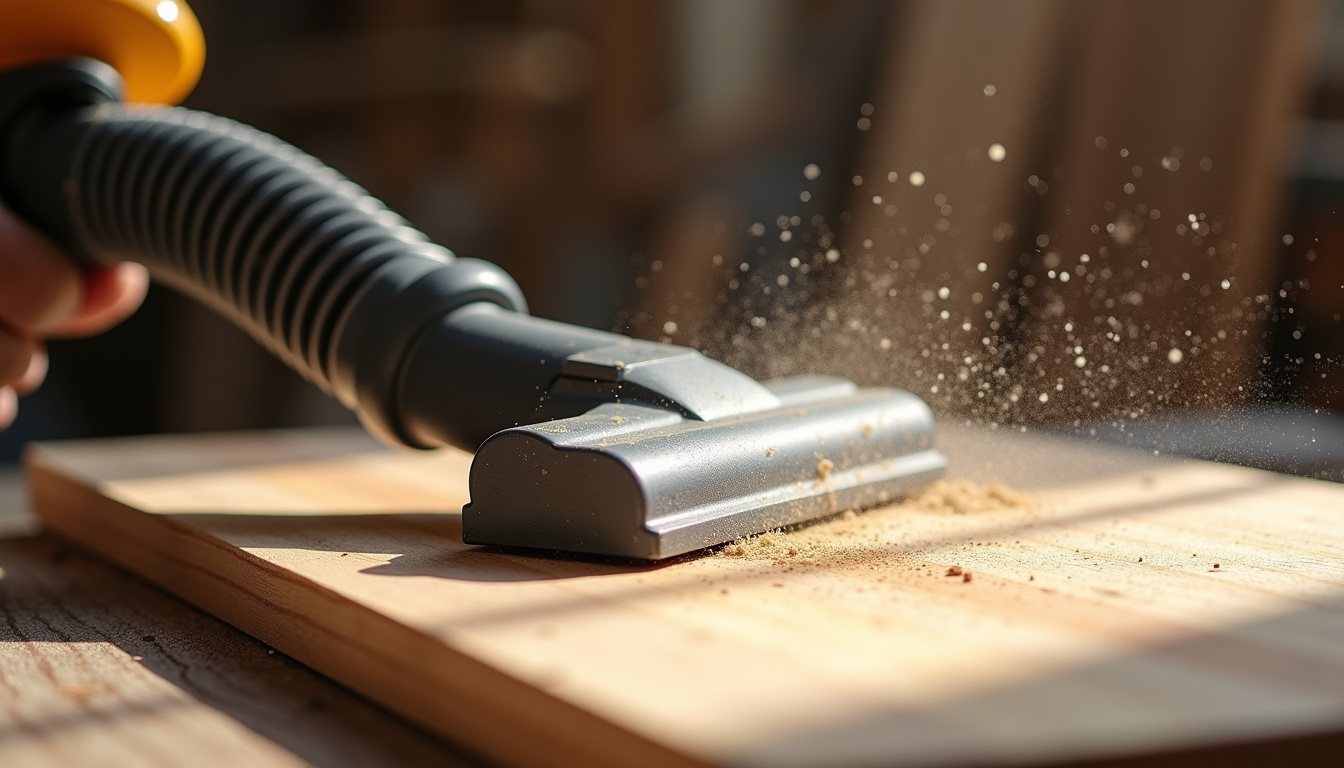
Dust control has two separate jobs. One is collecting chips and shavings so the floor is not ankle deep. The other is capturing the fine dust, mostly invisible, that hangs in the air for long periods after sanding or routing and gets drawn deep into the lungs. Most hobby setups do the first job reasonably well and the second badly. This guide focuses on the second.
Why fine dust matters
HSE's woodworking guidance explains that wood dust can cause asthma, skin problems and, in the case of hardwood dust, nasal cancer. The particles of most concern are the smallest ones: they stay airborne longest and penetrate furthest. Sanding, routing and cutting MDF generate a lot of them. A workshop can look clean and still have high levels of fine dust in the air, especially in the half hour after a sanding session. See HSE woodworking guidance for the background.
The order of control
- Reduce dust at its origin. Sharp tools that slice produce shavings, not dust. A hand plane or card scraper can replace a lot of sanding.
- Capture it at the tool. Connect sanders, saws and routers to an extractor so most dust is collected the moment it is made.
- Clean the air. Ventilation and air filter units deal with what escapes.
- Protect your lungs. Wear an FFP2 or FFP3 respirator during and after dusty work. Our PPE guide covers mask choice.
Types of extraction equipment
| Type | Good at | Weak at |
|---|---|---|
| Dust extractor (L, M or H class) | High suction through small hoses; fine dust from hand-held power tools | Filling quickly with large chips from planers |
| Workshop wet-and-dry vacuum | General clean-up, cheap | Often lacks a dust class rating and fine filtration |
| Bag-type chip collector | High air volume for planers, thicknessers and table saws | Cheap cloth bags can let fine dust through |
| Cyclone separator | Drops most chips and dust before the filter, so suction stays strong | Adds height and some loss of suction |
| Ceiling air filter unit | Cleaning airborne dust after the event | Does nothing at the moment the dust is made |
Dust extractors
These are the most useful single purchase for a small workshop that mainly uses portable power tools. They are designed to pull hard through a narrow hose, which is what sanders, track saws and routers need. Look for:
- A dust class rating, ideally M, tested to EN 60335-2-69.
- An airflow warning that alerts you when the filter clogs or the hose blocks. M-class machines have this as part of the standard.
- Automatic or manual filter cleaning.
- Power tool switching, so the extractor starts and stops with the tool. Check the maximum wattage of the tool socket.
- Antistatic hose, which reduces the small shocks you get from dust moving through plastic.
Chip collectors
Machines such as planer-thicknessers and table saws produce large volumes of chips and need high air volume through wide ducts, usually 100 mm. Single-stage bag collectors handle chips well, but the filter bag decides how much fine dust they return to the room. If you buy one, check the filtration rating and consider upgrading to a finer filter or cartridge.
Cyclones
A cyclone separator spins incoming air so heavier particles drop into a bin before reaching the filter. Small cyclones sit on top of a bucket or drum and fit between tool and extractor. They save filters and bags and keep suction high for longer. They do not by themselves make a cheap vacuum suitable for fine dust.
Hoses, fittings and layout
Suction drops with every metre of hose and every sharp bend. Keep runs short and straight, and avoid hose diameters smaller than the tool's port unless the extractor is designed for it. Mismatched fittings are a constant nuisance; stepped rubber adaptors and a roll of good tape solve most of them, and a few manufacturers sell universal connectors.
For a bench with a few power tools, a single extractor on wheels with a hose long enough to reach every tool is usually the best arrangement. Fixed ducting systems make sense once you have several static machines.
Making each tool collect better
- Sanders. Use discs whose holes line up with the pad, or mesh discs. Keep the pad flat on the work. Empty or swap the internal bag if you are not connected to an extractor.
- Circular and track saws. Collection is usually good when connected. Rip cuts in sheet material produce a lot of dust that sprays from the front.
- Routers. Collection varies a lot by cut. Edge profiling collects poorly; fitting the manufacturer's dust shroud helps.
- Mitre saws. Notoriously poor at collection. A hood or box behind the saw connected to the extractor catches much of what the port misses.
- Jigsaws. Most dust is thrown downward and sideways; collection is modest at best.
Cleaning up
Vacuum, do not sweep. Dry sweeping and compressed air throw fine dust back into the air. Use the extractor with a floor nozzle at the end of each session, and wipe surfaces with a damp cloth from time to time. Empty extractors outdoors while wearing a mask, and bag the waste so the dust does not escape again in the bin.
Change filters at the intervals the manufacturer recommends and never run an extractor without its filter. If dust appears on surfaces near the extractor's exhaust, the filter or its seals are leaking.
Ventilation and air filtration
Opening a door and window during and after dusty work helps, as long as the airflow carries dust away from you rather than across your face. An extractor fan in a window can work well in a small space. A ceiling-hung air filter running during and for some time after work reduces the fine dust that escaped capture; position it to create a circular airflow around the room.
A practical starting setup
For most hobby workshops based on portable tools: an M-class extractor with tool-triggered switching, a hose that fits your sander and saw, a box of FFP3 masks or a half mask with P3 filters, and the habit of vacuuming instead of sweeping. Add a cyclone pre-separator if you find yourself emptying the extractor constantly, and an air filter if you sand for long periods. Plan sockets for all of this when you lay out the space; our workshop planning guide has more on power and ventilation.