Workshop electrical safety
Power tools, a damp building and long leads are a risky mix. Most of the risk is managed by RCD protection, sound cables, sensible loads and leaving installation work to an electrician.
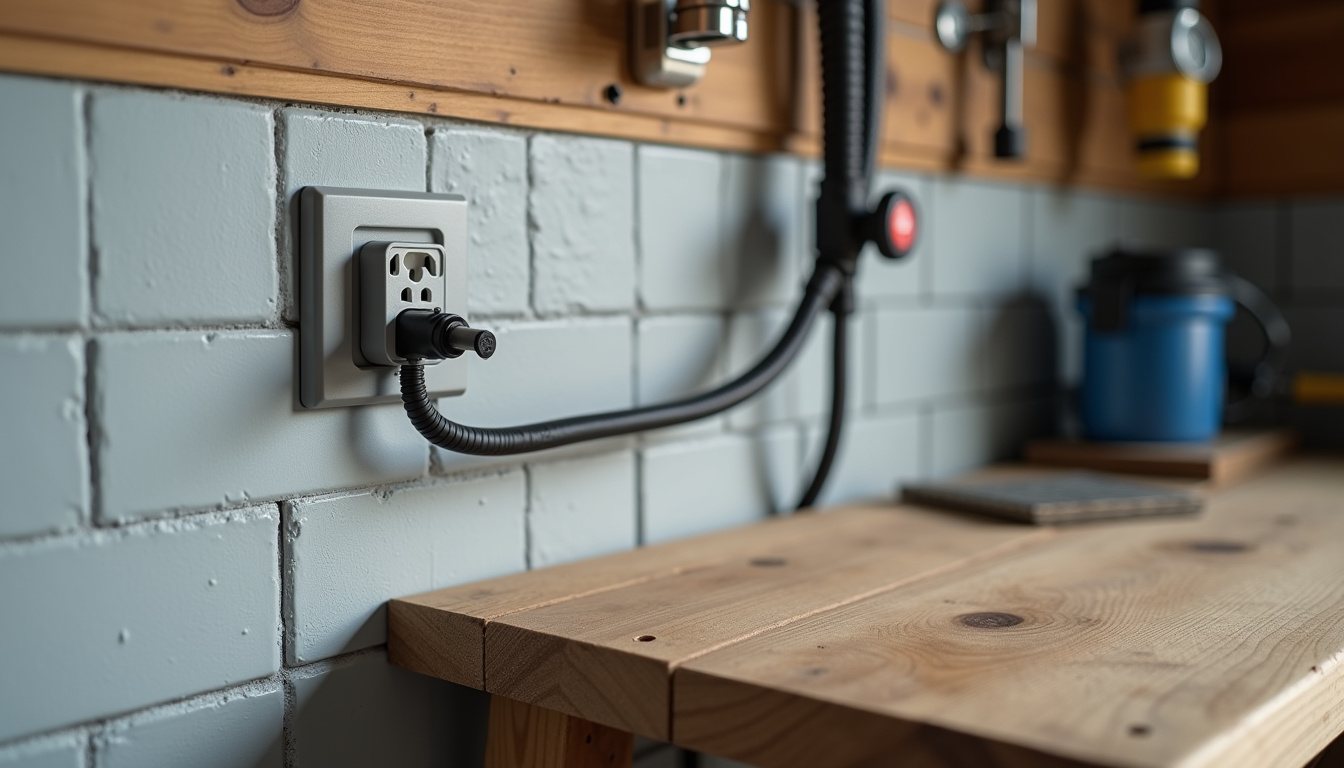
Electrical risks in a home workshop are real but well understood. People get hurt when a tool cuts its own cable, when a damaged lead is used in the wet, when sockets are overloaded through chains of adaptors, or when someone attempts installation work they are not competent to do. This guide explains how to avoid each.
This guide gives general information for UK homes and is not a substitute for advice from a registered electrician. Installation work on fixed wiring should be carried out by someone competent to do it.
RCD protection
A residual current device (RCD) monitors the current flowing in the live and neutral conductors. If they differ, because current is leaking to earth, possibly through a person, it disconnects the supply very quickly. A 30 mA RCD greatly reduces the risk of a fatal shock. It does not protect against every fault, for example touching live and neutral at the same time, and it does not replace a fuse or circuit breaker.
- The UK wiring regulations, BS 7671, require 30 mA RCD protection for most socket outlets in homes. Many older installations do not have it on every circuit.
- Check your consumer unit. RCDs and RCBOs have a test button, usually marked T. Press it periodically, as the manufacturer recommends; the device should trip immediately.
- If your garage or shed is supplied from a circuit without RCD protection, use a plug-in RCD adaptor as a temporary measure and have the installation checked.
Extension leads and cable reels
- Rating. A standard UK plug and lead is limited to 13 A, about 3,000 W at 230 V, across everything plugged into it.
- Unwind cable reels fully. A wound reel cannot shed heat, and its rating when wound is much lower than unwound. The label states both. A reel left partly wound on a high-power tool can melt.
- Do not daisy-chain. Plugging one extension lead into another increases the risk of overloading and adds more connections that can fail.
- Use outdoor-rated equipment outside. Leads and connectors used in gardens or wet conditions should be designed for it.
- Keep leads out of the cut. Route cables behind you and away from blades. Many cut cables are on circular saws, hedge trimmers and jigsaws.
- Do not run leads under mats or through doors where they can be crushed or chafed unseen.
Typical tool loads
Rated power varies by model; check the plate on your tool. As a rough guide:
| Equipment | Typical rated power |
|---|---|
| Battery charger | Tens to a few hundred watts |
| Jigsaw, random orbital sander | Several hundred watts |
| Router, circular saw, mitre saw | Roughly 1,000 to 2,000 W |
| Dust extractor | Roughly 1,000 to 1,500 W |
| Electric heater | Commonly 2,000 to 3,000 W |
A heater and a saw plus extractor on one extension lead will overload it. Spread high loads across separate sockets on a properly installed circuit.
Checks before use
HSE recommends that people using portable electrical equipment carry out simple visual checks, and those checks find most faults. Before using a corded tool or lead, look for:
- Cuts, abrasion or crushing of the cable sheath, and bare or coloured inner insulation showing.
- Insulating tape, which usually hides a bodged repair.
- The cable's outer sheath pulled out of the plug or tool so inner wires show.
- Scorch marks or a burning smell from a plug or socket.
- Cracked casings, loose parts, and plugs that feel hot in use.
Withdraw anything damaged and have it repaired properly or replaced. HSE's electrical safety guidance covers maintaining portable equipment.
Water, damp and dust
Garages and sheds are damp places and electricity and water do not mix. Use sockets and fittings suitable for the environment, keep water containers and wet sharpening away from sockets, never handle plugs with wet hands, and never use mains tools on wet ground. Fine dust collecting in sockets and inside tools is also a risk; keep the space clean, and use enclosed or metal-clad fittings in dusty areas. Our dust extraction guide covers keeping dust down.
When to call an electrician and Part P
In England and Wales, Part P of the Building Regulations covers electrical safety in dwellings, including detached garages and sheds supplied from the house. Some electrical installation work is "notifiable", which means it must be either done by an electrician registered with a government-approved competent person scheme, who self-certifies the work, or notified to and inspected by building control.
In England, notifiable work includes:
- installing a new circuit, such as a supply to a detached garage, shed or workshop;
- replacing a consumer unit;
- additions or alterations to circuits in special locations, such as rooms with a bath or shower.
Minor work such as adding a socket to an existing circuit outside special locations, or replacing like-for-like accessories, is not usually notifiable in England. It must still comply with BS 7671 and be done safely. Wales applies a slightly different list, and Scotland and Northern Ireland have their own building regulation systems. Check the official Approved Document P for England, or the guidance for your nation, such as Scottish building standards.
Whatever the paperwork says, if you are not sure how to do electrical work safely, do not attempt it. Running a supply to an outbuilding involves cable sizing, burial depth or overhead clearance, earthing arrangements and protective devices that need proper design. When you get a quote, ask the electrician to include enough sockets at bench height, separate lighting, and RCD protection.
Lighting and switching
Lighting on a separate circuit from sockets means a tripped socket circuit does not leave you in the dark with a spinning blade. Consider a switch or isolator by the door that turns off the workshop's socket supply when you leave, which also keeps tools from being used by others while you are away.
Cordless is not risk-free
Battery tools avoid trailing cables, but chargers and lithium-ion packs bring a fire risk if damaged or misused. Charge on a non-combustible surface, away from dust and shavings, and do not leave charging unattended. Our tool care guide explains battery care in more detail, and our planning guide covers sockets and power when laying out the space.