Caring for tools: rust prevention and battery care
Tools last for decades if they are kept dry, clean and lightly protected. Batteries last for years if they are charged and stored with a little care.
Rust is the main reason good tools end up ruined in garages and sheds, and it is almost entirely preventable. Batteries are the other big cost of a modern tool kit, and their lifespan depends heavily on how they are charged and stored. This guide covers both, along with basic cleaning that keeps power tools running well.
Why tools rust
Steel rusts when it is exposed to moisture and oxygen. In a workshop the moisture usually comes from condensation: when the air warms up and the tools are still cold, water condenses on them. Unheated garages and sheds go through this cycle constantly in spring and autumn. Other sources include handling tools with sweaty hands, water from sharpening, damp timber stored close by and leaks.
Prevention
Control the environment
- Keep water out. Fix leaks and gaps first; no coating will survive a dripping roof.
- Reduce humidity. A dehumidifier, sized to the space and emptied or drained regularly, is the most effective measure in a damp garage. A hygrometer tells you whether you need one.
- Insulate. Insulated walls and roof reduce the temperature swings that cause condensation.
- Use closed storage for valuable tools. A cabinet or drawer with a desiccant pack, such as rechargeable silica gel, keeps its own air drier. Volatile corrosion inhibitor (VCI) emitters and papers release a vapour that protects steel in an enclosed space.
Protect the steel
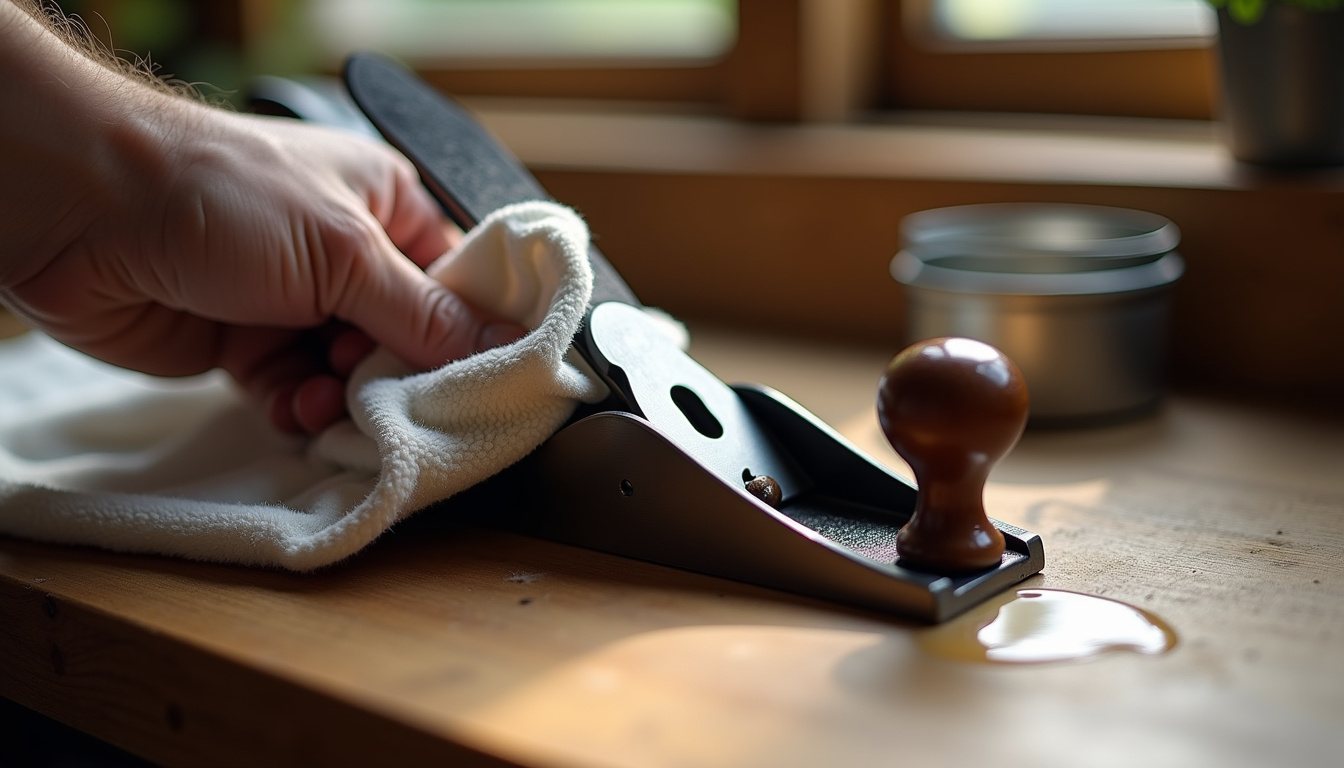
- Wipe after use. A cloth with a little light oil, kept in a sealed tin, removes fingerprints and leaves a protective film.
- Camellia oil is a traditional, light, non-staining oil for edge tools.
- Paste wax on cast iron machine tables and plane soles protects the surface and helps work slide. Use a wax without silicone, which can cause problems with finishes.
- Dry tools after wet sharpening. After using water stones, dry the blade thoroughly and give it a light oil.
Removing light rust
Light surface rust that has not pitted the steel is easy to remove:
- Wipe off loose dust and debris.
- Rub with a fine abrasive pad or fine wet-and-dry paper lubricated with a little oil, working on a flat surface for plane soles and chisel backs.
- Wipe clean and apply a protective oil or wax.
Heavier rust can be treated with a commercial rust remover or a long soak in a mild acid such as white vinegar, though this can etch the surface and must be neutralised and dried thoroughly afterwards. Electrolysis is another method used by tool restorers. Always follow the product instructions and wear eye protection and gloves.
Deep pitting on the back of a chisel near the edge means the edge will always have small gaps until the steel is ground back past the pits.
Cleaning power tools
- Vents. Motors draw cooling air through vents that clog with dust. Clear them with a vacuum or soft brush regularly. A clogged vent makes a motor run hot and shortens its life.
- Cables. Inspect for cuts, crushing and damaged plugs every time you use a corded tool. Do not tape over damage; replace the cable or have it repaired properly.
- Blades and bits. Resin build-up on saw blades and router bits makes them cut poorly and burn. Clean with a resin remover and a nylon brush.
- Chucks and moving parts. Keep them free of dust. Lubricate only where and how the manual says.
- Carbon brushes. On older brushed tools, worn brushes cause sparking and loss of power. Many tools have accessible brush caps; replace with the correct parts.
Looking after lithium-ion batteries
Modern cordless tool batteries are lithium-ion. They have no "memory" effect, so there is no need to run them flat before charging. They are, however, sensitive to heat, cold and physical damage.
| Do | Avoid |
|---|---|
| Use the manufacturer's charger | Unbranded chargers or batteries of unknown origin |
| Let a hot battery cool before charging | Charging straight after heavy use while the pack is warm |
| Charge at room temperature | Charging below freezing or in direct sun |
| Store in a cool, dry place, partly charged for long gaps | Leaving packs in a hot car or freezing shed |
| Charge on a hard, non-combustible surface, in a room with a smoke alarm | Charging overnight unattended or on a pile of shavings |
| Retire packs that are damaged, swollen or hot | Opening packs or trying to repair them yourself |
Battery terminals should be kept clean and dry. A pack dropped onto concrete may have internal damage even if it looks fine; if it becomes hot, swells, smells or behaves oddly, stop using it, move it outside away from anything flammable if it is safe to do so, and dispose of it properly.
Do not put lithium-ion batteries in household bins or recycling bags, where they can be crushed and start fires. Take them to a battery collection point or your local household waste recycling centre. Tape over the terminals first.
Wooden handles and other materials
Wooden handles on chisels, hammers and mallets dry out and crack if left in a hot spot, and swell or go mouldy if kept damp. An occasional wipe with a light oil keeps them comfortable. A loose hammer head is a hazard: replace the wedge or the handle rather than soaking it to swell the timber, which only works briefly. Plastic handles become brittle with age and sunlight, so check for cracks near the ferrule. Measuring tapes last longer if the blade is wiped clean and dry before it is retracted.
A simple maintenance routine
- Every session: wipe steel tools, put them away, vacuum dust, check cables.
- Monthly: check humidity, re-wax cast iron, clean vents and blades, recharge desiccant packs.
- Each autumn: before the damp season, check the roof and doors, clean and oil everything, bring batteries indoors.
Keeping edges in good condition is covered in our sharpening guide; reducing damp in the building itself is covered in our workshop planning guide. For the electrical side of corded tools and chargers, see our electrical safety guide.